

Appraising the brain’s energy budget
Summary & key facts
This 2002 PNAS review by Marcus Raichle and Debra Gusnard examines how the brain uses energy. The authors say the brain uses a large share of the body's energy and that most of that energy goes to ongoing, background neural activity. They note that short-lived, task-related increases in energy use are small compared with the brain’s resting energy budget, and they discuss what this means for interpreting brain imaging and brain function.
- The paper is a 2002 review article in Proceedings of the National Academy of Sciences by Marcus E. Raichle and Debra A. Gusnard (Proc Natl Acad Sci U S A. 2002 Aug 6;99(16):10237-9).
- The authors state that the human brain consumes a large fraction of the body's energy — commonly cited as about 20% of total energy use while being roughly 2% of body weight.
- Most of the brain’s energy budget, the review says, supports ongoing or intrinsic neural activity rather than brief task-evoked responses.
- Task-evoked increases in energy use are relatively small compared with the resting budget; the review describes these changes as being on the order of only a few percent of baseline activity.
- This article is a review and discusses existing data and interpretations; it does not present new experimental results and notes that some points were subject to active debate at the time (see related commentaries and papers in the same jou
Abstract
Proceedings of the National Academy of Sciences (PNAS), a peer reviewed journal of the National Academy of Sciences (NAS) - an authoritative source of high-impact, original research that broadly spans the biological, physical, and social sciences.
Topics
Functional Brain Connectivity Studies Mitochondrial Function and Pathology Neural dynamics and brain functionCategories
Cognitive Neuroscience Life Sciences NeuroscienceTags
Biology Ecological niche Ecology Evolutionary biology Geography Habitat Niche PasserineReferencing articles
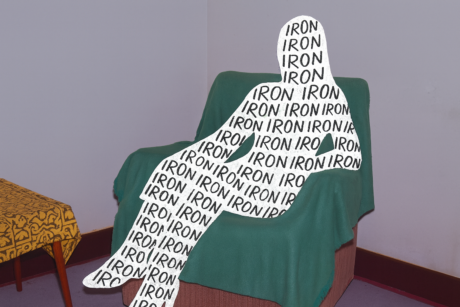
Can Low Iron Cause Depression?
Discover the link between iron deficiency (anemia) and depression, including symptoms, causes, and treatment options.
 Expert-Reviewed by:
Dr. Anna Steinzeig
Expert-Reviewed by:
Dr. Anna Steinzeig