

Magic truffles or Philosopher’s stones: a legal way to sell psilocybin?
Summary & key facts
The authors created a fast lab method (LC-MS/MS) to measure the psychoactive chemicals psilocybin and psilocin in Psilocybe sclerotia, also called "magic truffles." The method was sensitive and reliable, and when used on the samples in this study it detected only psilocybin, at 59.3–167.8 µg per 100 mg of fresh sclerotia. The paper also notes that sclerotia have become a supply form because they are not specifically listed in laws that ban psilocybin-containing mushrooms.
- The study developed a liquid chromatography–tandem mass spectrometry (LC-MS/MS) method to measure psilocybin and psilocin in Psilocybe sclerotia (magic truffles).
- The method's calibration was linear for both substances with r² > 0.99 over the tested range.
- The method's limits were 0.3 µg (detection) and 1 µg (quantification) per 100 mg of truffles for both psilocin and psilocybin.
- Intra-day and inter-day coefficients of variation were always better than 15%, indicating repeatability under the tested conditions.
- In the examined sclerotia samples, only psilocybin was detected; psilocin was not found in those samples.
- Measured psilocybin concentrations in the tested fresh sclerotia ranged from 59.3 to 167.8 µg per 100 mg of sample.
- The abstract does not state how many sclerotia samples were tested, so the results apply to the samples examined and may not represent all truffles.
Abstract
"Magic mushrooms" is the most common name given to hallucinogenic fungi containing the psychoactive alkaloids psilocybin and psilocin. In recent years, fungis' sclerotia, commonly called "magic truffles" have become a form of supply of psychoactive Psilocybe alkaloids since Psilocybe sclerotia are not specifically included in the laws banning the sale, the purchase and the use of such substances and mushrooms containing them. A liquid chromatography -tandem mass spectrometry (LC-MS/MS) method was developed for the rapid determination of psilocybin and psilocin in Psilocybe sclerotia. Following a simple step extraction with methanol, the alkaloids were separated on a reversed-phase column using a gradient of 0.1% formic acid - acetonitrile s a mobile phase at a flow rate of 0.2 mL/min.. Separated analytes were detected by electrospray ionization tandem mass spectrometry in the positive ion mode using multiple reaction monitoring. The developed method was linear over the calibration range for all two substances under investigation, with a r(2) > 0.99. The detection and quantification limits were 0.3 µg and 1 µg per 100 mg truffles, for both psilocin and psilocybin and the intra- and inter-day coefficients of variation were always better than 15%. Using this method, the presence of only psilocybin was demonstrated in examined Psilocybe sclerotia. The content of psilocybin was found to vary over a concentration range of 59.3 to 167.8 µg per 100 mg of fresh sclerotia.
Topics
Chemical synthesis and alkaloids Complementary and Alternative Medicine Studies Psychedelics and Drug StudiesCategories
Clinical Psychology Psychology Social SciencesTags
Biology Chemistry Chromatography Electrospray ionization Hallucinogen Mass spectrometry Pharmacology Psilocybin Selected reaction monitoring Solid phase extraction Tandem mass spectrometryReferencing articles
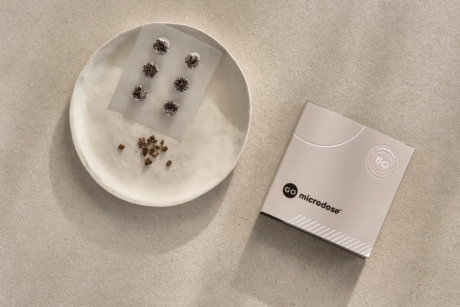
Beginner’s Guide to Magic Truffles: How to Start Psilocybin Microdosing Safely
Learn what magic truffles are, how microdosing works, and what science says about it.